Ronnie: Hi, everybody. Welcome back to the Barclays Brief. It's Ronnie. I just landed in London. It's rainy, it's dark. Summer's definitely over. Everything feels pretty normal to me. I'm with our UK chief economist, Jack Meaning. Jack, it's great to have you here.
Jack: It's great to have you here in London, Ronnie and sorry about the weather.
Ronnie: It's nice to be here. It's always nice to be here. So you just published a really interesting piece in conjunction with the IFS on the budget outlook for the UK. Before we dig into it, could you spend a little bit of time telling our listeners about the IFS and how we work together?
Jack: Yeah, I think this is really exciting as a collaboration that Barclays have been able to make this year is the IFS: The Institute for Fiscal Studies is the gold standard and has been for more than five decades, erm in UK fiscal policy.
So they are an independent research group that looks at everything in the UK to do with tax and spend they’re world renowned. And we have managed to build a partnership with them where we use their expertise on fiscal policy and we bring Barclays more than three centuries of experience in UK and global financial markets and macroeconomics.
So we provided that and it joined perfectly with their expertise on the ins and outs of tax and spend
Ronnie: So our focus this week is going to be on the UK, on the financial outlook on the budget. You published this piece. It talks about navigating narrow paths, but you see a path forward here that will create stability for the market. Can you tell us a little bit about what that looks like?
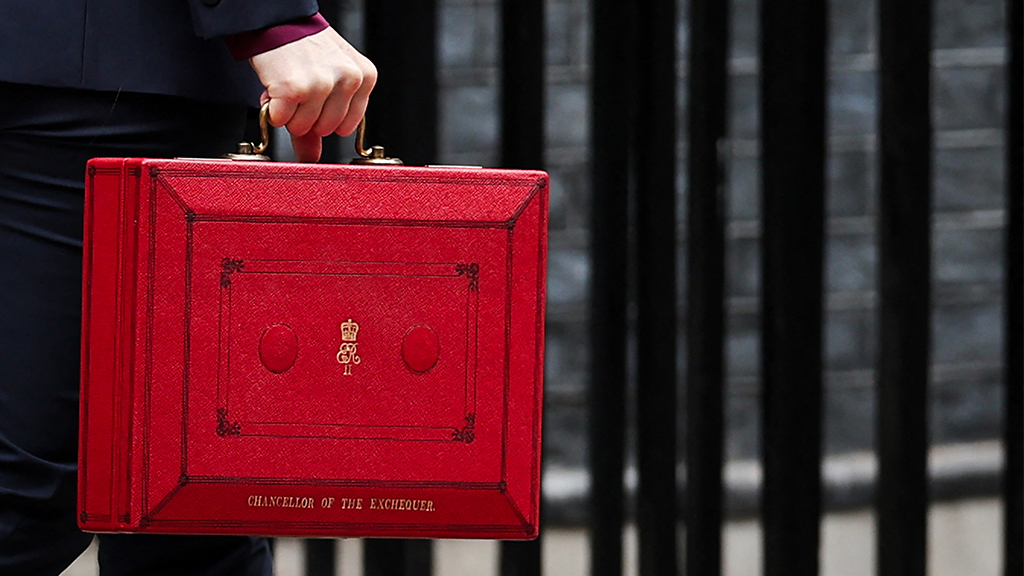
Jack: Yeah. Look, the economic backdrop that the Chancellor faces going into November's Budget is, a difficult one. She's faced with slowing growth, rising unemployment and despite that, inflation still staying stubbornly high. But on our read of the economy, actually, as we see interest rates start to come down over the next 3 to 6 months, as we see the unemployment rate peak and we start to the uncertainty come down, ultimately, we should see a cyclical uptick in the UK as we move through next year and move towards a world where the medium term, the UK, can be growing at 1.5% increase in GDP, not only in aggregate but per capita. So that people's living standards are going up. That's all possible if the Chancellor gets good decisions at this budget.
Ronnie: Jack you’re a UK citizen. It's clear to me that UK citizens are concerned. You can see it in the savings rate. You can see it in other places. What do you think is driving this and how would you characterize the sentiment?
Jack: Ronnie, you see the same things as I do, not just in the UK but around the world. Uncertainty is high. You know, trade uncertainty kind of geopolitical uncertainty. And we see that reflected in households and business’ decisions. Households in the UK saving more than 10% of their income. So even as incomes grow, that acts as a bit of a brake on their spending, businesses are holding back on investment because they're not sure of where things are going to be in 6 to 12 months’ time.
So, you know, we see that. But if uncertainty starts to dissipate over the next 6 to 12 months, if we start to see interest rates fall and any kind of finance conditions ease, then actually the balance sheets of firms in the UK and the balance sheets of households should allow them to be able to kind of bring some of that spending and investment back on stream.
Ronnie: Okay, let's dial it back into the path forward a little bit here. It's clear that the UK needs to raise revenue. It's also clear needs to happen in a way that doesn't stoke inflation. Why is that interplay so important?
Jack: Well look on our assessment, the Chancellor is looking for somewhere between £25 to 30 billion at this budget just to keep to where she was, back in the spring in terms of her fiscal rules. And she has options of how she does that:
We think that she will find it difficult from a political point of view and within her own party, to do much on the spending side so that falls on taxation, and not all tax levers are created equal. So in the last October budget last year, the Chancellor pulled levers that created near-term inflation. And we think that actually, almost a percentage point of the current inflation in the UK is driven by those kind of decisions.
If she does that again, this time, our modelling suggests that that will mean the Bank of England finds it harder to cut rates. And actually, the hit to the economy could be almost double the size. So a quarter of a percent of a hit, if she does tax increases in a non-inflationary way.
But if she increases inflation at the same time, then actually that could be more like half a percent.
Ronnie: And it strikes me that some of those levers that she would need to pull would go against some campaign promises. How do you see this playing out?
Jack: Look, the IFS’ expertise looked at all the options the Chancellor has, and she does have options, but their assessment, and they’re the experts on this, their assessment was if you pull half a dozen different levers to get the money, you could, but you’d be creating distortions in the economy, and you’d have to pull some of those levers pretty hard, with pretty uncertain impacts. So gambling taxes, and bank levies and changes to property taxation and all of these different things, you’d basically have to do a big swathe of them. Much cleaner, would be to go and look at something like income tax, but as you say, the Chancellor made a manifesto promise that she wouldn’t do that. So she’s having to weigh up that political difficulty of a manifesto promise that maybe she’s bound by at the moment versus the economic reality of all of these taxations that she’d have to look at.
Ronnie: Quite the delicate balancing act. So it's amazing to me that we made it this deep into the podcast without talking about AI and productivity through the lens of AI. What could this mean for the UK and the UK economy?
Jack: So the productivity and the outlook for productivity is absolutely at the heart of the UK's prospects over the medium term.
And we have a view that actually productivity will pick up. But we are not the most optimistic people out there. The most optimistic are the Office for Budget Responsibility (OBR), they’re the independent forecasters for the Chancellor and the government, and they have a view that productivity will pick up dramatically over the next few years. AI could be part of that story.
So our Barclays Prosperity Index suggests that actually 30% of firms in the UK are already using AI to lower their costs. 70% almost plan to increase our investment in AI over the next 12 months. And if we were to see that feed through more broadly into firms and across the economy, then actually that could be a much more positive story on productivity.
And actually, we think in a good scenario, could add 2% to the level of GDP by the time we get to 2030.
Ronnie: Jack, you've done some great work here. I've read your piece several times, and it creates a very observable path forward that feels like a good outcome for the UK and the economy. But these are complex issues, this is a complex economy. If you were to be wrong, if this were to land in a less stable place, how would you envision that playing out?
Jack: Ronnie we've already talked about the risk of an inflationary budget and how that could derail a monetary policy easing cycle, keep rates higher and squash demand. That's definitely one risk and one way we could be wrong in our kind of positive view.
The other is that actually if we don't see uncertainty, start to dissipate, if we continue to see geopolitical risks around the world stay elevated, then actually that could continue to weigh on households and businesses, and then you just would really struggle to get the kind of growth rate in the medium term that we're talking about. And that just exacerbates the problem for the chancellor.
Ronnie: So it’s clear than uncertainty feels like the crux of this issue, and bringing confidence back will be very important. Can we talk a little bit about the uncertainty in the Gilt market right now?
Jack: Look, I think if you speak to our traders and to our strategists, around the firm, they will tell you the dynamic of the gilt market for a while now has been one about speculating around headroom and the Chancellor's reaction to that and how credible the fiscal plans are.
And that has driven a sensitivity in the UK market. What would be really positive from a gilt market point of view here is a credible consolidation, maybe one that includes some nods to spending restraint. I think, you know, we hear that a lot from clients. That they would be looking for some evidence that the government is willing to make hard decisions on spending, but also to be able to consolidate through taxation in a way that's not inflationary, and maybe to build up more headroom against the fiscal rules, so we don't end up back in the same place in a year's time. All of that is a pretty positive story for the gilt market, which the underlying fundamentals of a pretty, pretty attractive.
Ronnie: Jack, this was a lot of fun, thank you for joining us, we really appreciate it.
Jack:
Absolute pleasure.
Ronnie:
Believe it or not, I can actually see the sun coming up outside the office, and we covered a lot.
So as I leave the studio, here are my key takeaways.
First, the UK economic backdrop presents challenges and those challenges will require hard and balanced decisions.
What I'll be focused on after this time with Jack, is a path forward that is both disinflationary and promotes confidence.
And I'll be watching the gilt market like a hawk, as will most market practitioners in the aftermath of the budget release.
And finally, productivity enhancements and AI enhancements could be key, if the UK economy is to reaccelerate in the medium-term.
Thanks for joining us today. Please subscribe to this podcast wherever you're listening. All of our listeners can read more of Jack's work in the show notes.