


RESEARCH | THE FLIP SIDE | EPISODE 61
Can the Fed take credit for declining inflation?


12 Mar 2024



To subscribe, please visit:



Inflation in the US peaked at around 9% in 2022, and by January 2024, CPI inflation had fallen to 3.1%. This dramatic reduction was achieved without triggering a widely expected recession. Does the Fed’s interest rate hiking cycle deserve credit for this correction, or were other market forces responsible for the generally positive economic outcome?
In episode 61 of The Flip Side, Global Head of Research Jeff Meli debates that question with Chief US Economist Marc Giannoni, considering how factors such as market expectations, post-pandemic economic realities, shifts in labour force, and housing stock availability drove cooling alongside – or instead of – the Fed’s monetary policy.
Clients can follow our analysts’ views on the paths of interest rates and economic activity in the Global Economics Weekly on Barclays Live for more insights on this and other topics.
-
Jeffrey Meli: Welcome to The Flip Side. My name is Jeff Meli. I'm the head of research at Barclays and I'm joined today by Marc Gionnani, our chief US economist. Thanks for joining me, Marc.
Marc Gionnani: Thank you for having me, Jeff.
Jeffrey Meli: Alright. Today we're going to discuss how much credit we should give the US Federal Reserve for engineering a decline in inflation without causing a recession here in the US. Now remember when the Federal Reserve first started hiking interest rates, most economists, including us here at Barclays, were forecasting a recession. About the best scenario anyone could conceive of was what we called a ‘soft landing’, which was when activity would slow, not quite enough to cause a recession, but by just enough to cause a decline in inflation. But we have actually done even better than that.
Marc Gionnani: Indeed, the US economy is very strong and continues to grow above its long run rate, at least so far, yet, inflation has fallen dramatically from its peak. It's not quite back to target and the Fed may have its work cut out for it going forward, more so than most investors believe, but I think the Fed deserves a lot of credit for taming inflation while keeping the economy moving forward.
Jeffrey Meli: Well, Marc, I disagree. I think the economy is evolving around the Fed and that interest rates are largely a sideshow. This decline in inflation that we've enjoyed was pre-baked once markets and the economy normalized after COVID. This was going to happen. It just took longer than we were expecting, but the process was going to happen regardless of what the Fed did with interest rates. I'm not saying that these hikes were a mistake. Instead what I'm saying is that monetary policy just isn't this all powerful force driving the economy the way that we have been trained to believe?
Marc Gionnani: Well, let's step back. It's worth summarizing the state of the US economy. We can't overstate the strength of the US economy. this has been really, truly remarkable. Inflation has declined substantially, peaked at over like 9% in the summer of 2022, and in January of this year, CPI inflation was at 3.1%. PC inflation, the Fed's preferred measure was even lower at 2.4% year over year. It's not yet at the 2% target, but the situation is obviously much improved.
And not only did we not have a recession, the US economy remains above trend with GDP growth above 3% in the fourth quarter and likely just a bit slower in the first quarter of this year. And we keep adding over 200,000 jobs per month. Indeed, in January we added over 350,000 jobs and the unemployment rate remains below 4% and wage growth remains elevated.
Jeffrey Meli: Yeah, on top of that, asset prices are high and rising. The equity markets at all-time highs, the fixed income market has recovered from the initial shock of higher rates. Housing prices are elevated. It really feels like Goldilocks from a macro perspective and that's just the time when everyone starts trying to take credit for this great economy.
Marc Gionnani: I'll take the first step, but just before we give kudos for controlling inflation, I would like to note that the surge in inflation did not happen in a vacuum. Monetary policy was too accommodating for too long in the aftermath of COVID. It acted as a multiply under huge fiscal stimulus supplied by the federal government. And remember that in September, 2020, the FOMC had committed to keeping interest rates at zero until inflation would be at 2%, expected to be above 2% and the labor market was at full employment and the Fed was too slow or too late in seeing that the labor market was overheating. So it only started raising rates in March, 2022.
Jeffrey Meli: Now of course, once the Fed realized the situation, it acted very rapidly. The Fed funds rate went from 0% to 5% at the fastest pace that we've experienced since 1980. So over 40 years since we've seen interest rates rise that quickly. The pace and the magnitude were so severe that most forecasters were expecting a recession – expecting, but it actually never happened.
Marc Gionnani: Well, I think this is where the Fed does get some credit for using monetary policy to cap inflation expectations. When the Fed was increasing its policy rate by 75 basis point for four consecutive meetings in 2022, and Powell made clear that the Fed's overarching focus was to bring inflation back down to 2%. This was clearly designed to keep inflation expectations anchored at 2%. Here I'm talking about expectations of market participants, of forecasters, of households of all business leaders, everybody that sets prices.
Jeffrey Meli: Now we track expectations very closely for inflation. It's actually different than other macroeconomic variables. We don't track expectations of unemployment rates or expectations of growth, but we don't track those because they don't tend to become self-fulfilling. Inflation has this odd sort of partly psychological component to it, which is that if you expect a certain level of inflation, you behave accordingly and it makes that level of inflation a self-fulfilling prophecy. And so, we do watch this expectations issue very closely.
Marc Gionnani: Yes, that's right. I think this inflation expectations and these self-fulfilling prophecy depend a lot on what monetary policy does. Most of our models attribute a very important role to inflation expectations in determining inflation. And the policy regime is key determinant of how these inflation are being determined. In fact, what is remarkable is that even when the CPI inflation surged above 9% in 2022. Inflation expectation remain anchored at around 2%.
In other words, people remain confident that the surge in inflation would eventually recede. This is very different from the high inflation episodes of the late 1970s and early eighties when inflation expectation increased a lot, which eventually forced the Fed to raise rates to nearly 20% to the point of causing a very severe recession.
Jeffrey Meli: So Marc, my objection to this view is that it's utterly expost reasoning. Not one official forecaster said going into the hiking cycle that the goal for the Fed would be to hike just enough to control expectations and not to damage economic activity. Even the Fed itself wasn't saying that. The path from interest rate hikes to lower inflation always went through slower activity in the economy and a weaker labor market. They were not designed to micromanage the path of expectations and call it job well done.
Marc Gionnani: Well, The Fed obsesses about inflation expectations.
Jeffrey Meli: Sure, in steady state. But once inflation actually surged, the view was that the economy actually had to slow in order for inflation to get back to target. Maybe containing expectations was like part of the solution, but the bigger part was going to be slower growth and higher unemployment.
Marc Gionnani: Well, I wouldn't say quite the bigger part, but you're right that Powell made very clear many times that there would be likely cost of reducing inflation in the form of reduced growth, softer labor market conditions, as well as some painful household and businesses. So not surprisingly as people saw rates continuing to surge and the Fed showing determination to bring inflation down, despite the cost forecasters including us and many others, view it as quite likely that the Fed would cause a recession in 2023.
I believe that the expectations that inflation would come down, that the economy would enter in a recession had themselves a moderating effect on inflation and activity. So if you're a business leader again in a cyclical industry and you expect a recession, you might think twice about increasing your margin or starting new equipment investments.
Jeffrey Meli: Now I struggle with that, Marc, if businesses and consumers were expecting a recession, shouldn't they have spent less money, done less investing? Wouldn't we then have seen activity slow and the labor market soften? I don't think the effects of lower activity like that would be limited to inflation. It seems to me like we're cherry picking one measure of economic activity – inflation and saying that's where the rates had an effect and trying to explain away the fact that they didn't have an effect on any of the other measures of economic activity that are usually very correlated.
Marc Gionnani: Yes, but the economies propelled by significant tailwind, consumers are flush. They have benefited from very generous fiscal transfers, an increase in wealth and significant income growth given by the tight labor market. On top of that, fiscal spending and incentives provided by the Inflation Reduction Act, the CHIPS Act and so on, are also stimulating demand. So I think of the US economy like a cyclist riding down the hill, the tailwinds that we just mentioned are like a steep slope on the hill causing the cyclists to go very fast and monetary policy is like the brakes on the bike.
So policy is pressing the brakes to slow the cyclists down and improve stability. If we are looking at the cyclists quickly passing by, we may think that the brakes don't work even if they work just as well as usual. In other words, it's not because we see the economy continuing to grow rapidly, that monetary policy doesn't work. It may just be a reflection of these very strong tailwind.
Jeffrey Meli: Well, I think that's a very good analogy, Marc, but you still need to explain why inflation fell, but other measures of economic activity have not moderated.
Marc Gionnani: Well, it's not true that the other measures did not moderate or at least that none of the measures moderated. The labor market has called. For example, job openings have come down from 12 million, remember two years ago to nine million last December. And firms hiring rate have normalized also quits rate have come down below pre pandemic levels suggesting that workers are no longer very confident that they can get another higher paying job elsewhere. As a result of the gradual easing in labor market conditions and wage growth has moderated over the past year, labor costs at less increasing, more moderately than in past years, just like inflation is above target, but below its peak now.
Jeffrey Meli: Well, some of this, Marc, is just, again, the COVID shock sort of normalizing. So workers left the labor force during COVID, they're reentering the labor force now that was bound to take some of the steam out of the labor market. Keep in mind as well that we've experienced a surge in immigration in the US and that's increasing unemployment.
So another sort of interpretation of this could be that even with the increased number of workers both reentering the workforce and new migrants into the country, we're still experiencing a tight labor market. In other words, we've absorbed all of that and unemployment still isn't going up. That makes me struggle even more to see the effect of a record setting pace of interest rate hikes. It seems to me like you're proposing a new channel that we've never seen before, which is that you can have monetary policy reduce inflation, but without any appreciable economic pain along any of the other metrics that we usually look at.
Marc Gionnani: Well, I would say it slightly differently given the structure and momentum of the US economy at present, the large fiscal deficits that the US is running and the level of inflation would have been substantially higher had the Fed not raised rate as much as it has.
Jeffrey Meli: Alright, I'm going to give a different narrative and my telling monetary policy has had no appreciable impact on inflation. So let's recall that the initial impact on inflation came from COVID and the disruption that it imposed on supply chains. We were all stuck at home desperate to buy more goods and yet the system, the economic system globally couldn't deliver those goods. And so, we saw a huge surge in goods inflation.
Marc Gionnani: Yeah, that's a very apt description of the evolution of inflation in goods prices. But it's only part of the story. As inflation fear receded, the demand for services such as dining, travels and entertainment, hospitality, all of that came back and inflation in services started rising. And that increase in services inflation was also associated with rising wages. So unlike the goods price inflation, the supply was not suffering from material shortages and supply chain disruption. Instead, that supply of services was suffering because of labor shortages is several million had left the workforce.
Jeffrey Meli: Alright, fine. So services inflation occurred at a different time than goods inflation, but I would argue it was still linked to COVID and the supply of labor in the market. But remember what we said about inflation back then?
Marc Gionnani: Yeah, of course I remember. We thought it was transitory, meaning that these shocks would fade and inflation will fall back in line, which didn't happen. Inflation remains stubbornly high forcing the Fed's hand.
Jeffrey Meli: Yeah, I think the transitory narrative was actually correct. It was right all along. This inflation impulse was destined to fade. Sure, as you suggested, it took longer to fade than we expected. Maybe because the sequencing between goods and services was out of sync. Maybe because there were other things happening in the global economy, like Russia's invasion of Ukraine, for example, and the effect that had temporarily on energy prices. But really, none of these are permanent shifts. These are just lagged responses to the COVID impulse, which was destined to slowly but surely dissipate.
Marc Gionnani: But let me ask you this. And you don't believe that the massive increase in rates is helping that process along?
Jeffrey Meli: I don't. Now I'm going to give you a macro and a micro example of why not. First, at the macro level, there are two big structural issues that limit the effect of higher interest rates on the economy. The first is that despite this surge in good spending that we all experienced in the initial months of COVID, the United States economy is primarily a services economy. 70% of GDP is linked to services and services are just naturally less rate sensitive than goods are.
Remember that this is not the first time we've been confused about the efficacy of monetary policy. Pre COVID, we had a almost the mirror image scenario had unemployment, very low inflation well below target interest rates pegged at zero and the Fed couldn't get inflation up. We called it miss-inflation at the time.
Marc Gionnani: Well, that was typical and I attribute it to the financial crisis which tend to lead to slow recoveries, especially because policy rate was constrained by the zero lower bound as well. We have a lot of history about financial crisis and the impact on activity, but the shock of COVID restored the economy or brought the economy back to a more normal environment. And so, I do not expect us to return to this zero interest rate zero inflation or low inflation equilibrium again for quite a while.
Jeffrey Meli: Well, look, I think the crisis point is a good one, Marc, but at the big picture level, I would say that it's been well over a decade since we've seen monetary policy have the expected effect on the economy. And we kind of can explain it with this and that, different explanations in different periods, but we're still left with the conclusion that monetary policy isn't doing what we expect it to do.
Regardless, the other big structural issue that I think is worth mentioning is that there was a huge amount of debt taken out during the COVID period when interest rates were pegged at very low rates. That debt was taken out by both households and businesses, some of which is very long dated.
Marc Gionnani: Yes. We've all heard about the mortgage lock in effect. People refinance where mortgage rates were very low, and now that they're much higher, people don't want to move and there was a wave of corporate issuance as well in the COVID period.
Jeffrey Meli: Yeah. And those borrowers could care less what the Fed funds rate is. They're locked in, they're not going to pay that interest rate no matter what. So if no one's actually paying these higher rates, why would we expect them to matter?
Marc Gionnani: First, higher mortgage rates discourage new marginal buyers from buying a home. And for those who finance at a lower rate, the debt matures. People need to move for all sorts of reasons. Some of the debt is also floating, particularly for companies. And in the high yield market and those companies pay higher rates immediately. But sure, this might delay the effects of rates. But remember, we say the lags of monetary policy are long and viable. It doesn't mean that they have no effect.
Jeffrey Meli: Alright, well, here's my micro reason why rates are not having the expected effect. Even the housing market didn't slow in response to the record pace of Fed hikes. If higher rates don't cause problems in the housing market, which is about as rate sensitive as you get, why would we expect it to have an effect on the economy as a whole?
Marc Gionnani: It's fair to say that the housing market did not respond very strongly to the rate hikes. Housing data did show some slowing in 2022 when the Fed raised rates and mortgage rates doubled home sales and housing starts fell sharply. We also had a structural issue with too few homes available to meet the demand and a large shadow demand for housing.
Jeffrey Meli: Well, I agree with the shadow demand point. So we have structurally underbuilt homes in the United States for a very extended period, basically since the global financial crisis and the housing bubble burst. Part of that's because of restrictive zoning. Some of it might be sort of a hangover associated with like losses that builders took around that time.
So yes, there are some structural factors behind the resilience of housing and maybe that helps explain why the weakness in housing that you cited lasted like six to nine months, right? And then the housing market was back on its feet again. But my larger point is that these structural issues that we're talking about are dominating the effect of rates. So rates went up. You normally expect to see housing suffer. Housing doesn't suffer because of the shadow demand that you're talking about. It's clearly that these other issues are trumping the level of rates.
Marc Gionnani: That's right. And we haven't even mentioned the biggest structural issue of all I guess the massive deficit. That's also a big driver of the economy. So there is no question that this deficit's very large. It reached 7.5% of GDP in the fiscal year 2023. This is particularly notable given the strength of the economy and it serves as a tailwind as well.
The effect of the tailwind can be seen also in the international comparison. For instance, rates went up in Europe and in the US and inflation came down in both. But Europe has not had the fiscal stimulus that we've had and its growth is significantly slower.
Jeffrey Meli: Yeah. In fact, Europe's basically flirting with a recession.
Marc Gionnani: That's right. And in contrast, the US activity accelerated in the second half of last year. But this is notable that the main difference is not on the inflation front, it's more on the growth front. The higher rates have likely helped restrained some of the stimulative impact of fiscal policy.
Jeffrey Meli: I want to turn to a last driver of the economy, the wealth effect. So wealth effect means when consumers get richer, they spend more, that supports growth. When they get poorer, they spend less and growth slows. Now when interest rates rise, you usually see wealth go down. This is actually an important channel through which monetary policy affects the economy.
Marc Gionnani: Wealth or asset prices are part of a broader financial and the transmission of monetary policy as well. When central banks lower rates or buy assets, say via quantitative easing, for instance, to support the economy, they tend to raise prices of other assets, thus increasing wealth and spending.
Jeffrey Meli: Yeah, but here's the problem. Other than that six to nine month period that we just referenced in 2022 when housing market fell, we're totally missing this channel. In fact, if anything it's going the opposite direction. Equity prices are at all-time highs. The fixed income markets recovered; housing prices are back to being elevated. The wealth effects are positive, they're not negative. So once again, we're just not seeing the expected effect of rates.
Marc Gionnani: I agree to the increasing wealth since the pandemic constitutes an important fundamental driver of consumption and aggregate demand along with also solid income growth. This is one of the reasons that monetary policy needs to remain restrictive and that the Fed is not yet confident that inflation is sustainably coming down to 2%. That said, there are some signs of activity being impaired. Look at the IPO market for example. It's still very slow.
Jeffrey Meli: Alright, well let's turn to the future, Marc. Given the momentum of the economy, I have to admit that I'm a bit confused about the expectations out there that the Fed is going to start cutting interest rates. I think that the main drivers of the economy are structural. It's the big deficits, the wealth effect on consumers and the interest rates have not dampened that and they won't.
And given that, I think the economy's going to maintain its momentum. If it maintains its momentum, the Fed is going to have a hard time cutting interest rates because the fundamental strength of the economy well will persist.
Marc Gionnani: Well, I think monetary policy is slightly restrictive now, I don't think it's extremely restrictive, but it is slightly restrictive. And with that, we expect activity to gradually slow coming this year. We expect inflation to gradually come down and that would allow the Fed to start cutting rates. We don't expect that to happen anytime soon, but maybe sometimes around the summer, we expect the Fed could start really cutting rates if the economy has slowed.
Jeffrey Meli: Alright, well, we'll obviously be tracking this very carefully over the next several months. Clients of Barclays can follow our latest take on the path of interest rates and the level of the economic activity in the Global Economics Weekly available on Barclays Live.
About the experts
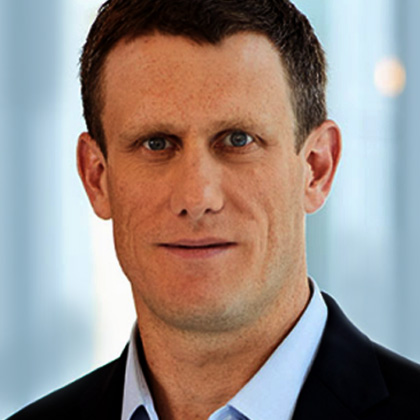
Jeff Meli
Global Head of Research, Barclays

Marc Giannoni
Chief US Economist, Barclays
* We acknowledge and agree for Barclays to collect, use and otherwise process our/the Relevant Individual's Information in accordance with the Notice, other effective privacy terms and information processing terms agreed by ourselves/the Relevant Individual with Barclays, for the purposes set out therein, respectively.
* We acknowledge and agree that Barclays may disclose to any third party described in the Notice as a potential recipient of data outside mainland China our.the Relevant Individual's Information in accordance with the Notice, other effective privacy terms and personal information processing terms agreed by ourselves/the Relevant Individual with Barclays, and for the purposes set out therein, respectively.
I consent to my email address being used by Barclays to provide me with personalized advertisements on third-party websites and social media platforms, as described in our Privacy Notice.
An email was sent to you at the address provided. Complete your subscription by clicking the link provided to verify your email address.
Sorry there was a problem. Unfortunately your subscription to our newsletter has encountered an error.
In addition to the cookies we use on our website, we also use cookies and similar technologies in some emails and push notifications. These help us to understand whether you have opened the email and how you have interacted with it. If you have enabled images, cookies may be set on your computer or mobile device. Cookies will also be set if you click on any link within the email.
In addition to the cookies we use on our website, we also use cookies and similar technologies in some emails and push notifications. These help us to understand whether you have opened the email and how you have interacted with it. If you have enabled images, cookies may be set on your computer or mobile device. Cookies will also be set if you click on any link within the email.
In addition to the cookies we use on our website, we also use cookies and similar technologies in some emails and push notifications. These help us to understand whether you have opened the email and how you have interacted with it. If you have enabled images, cookies may be set on your computer or mobile device. Cookies will also be set if you click on any link within the email.
Please review and manage your email cookie settings below. For more information, please read our Cookie Policy. Please select 'Save and Subscribe' below to remember your email cookie preferences and subscribe to the newsletter.