Episode 80 - Is US equities exceptionalism finally cracking?
Global equity performance improved in 2025. Brad Rogoff and Emmanuel Cau debate whether international outperformance marks a lasting shift or a cyclical reset.



Investment Bank
Barclays Live
BARX
BarclaysME
RESEARCH | THE FLIP SIDE | EPISODE 85
If the Fed goes quiet, do markets make more noise?


09 Jul 2026



To subscribe, please visit Apple Podcasts or Spotify
SUBSCRIBE
For over three decades, the US Federal Reserve has moved towards greater transparency, introducing new ways of communicating its outlook to markets. Weeks into his tenure, Fed Chair Kevin Warsh is reversing that trend. He scrapped forward guidance and opted out of the dot plot, arguing that markets have become overly focused on interpreting Fed signals.
In this episode of The Flip Side, Brad Rogoff, Global Head of Research, and Ajay Rajadhyaksha, Global Chairman of Research, debate whether markets have become too reliant on central bank communication and what may happen without it. They explore the evolution of Fed transparency, the risk of market volatility if the Fed goes quiet, and whether investors may ultimately benefit from being forced to focus more closely on economic fundamentals.
The discussion also considers the current macro backdrop and whether a period of inflation uncertainty, oil shocks and market repricing is the right moment for the Fed to take a different approach.
Listeners can learn more about this topic:
Flip Side ep. 80: Is US equities exceptionalism finally cracking?
Barclays Brief ep.34: The Fed’s next move
Clients of Barclays Investment Bank can read our latest reports by logging in to Barclays Live:
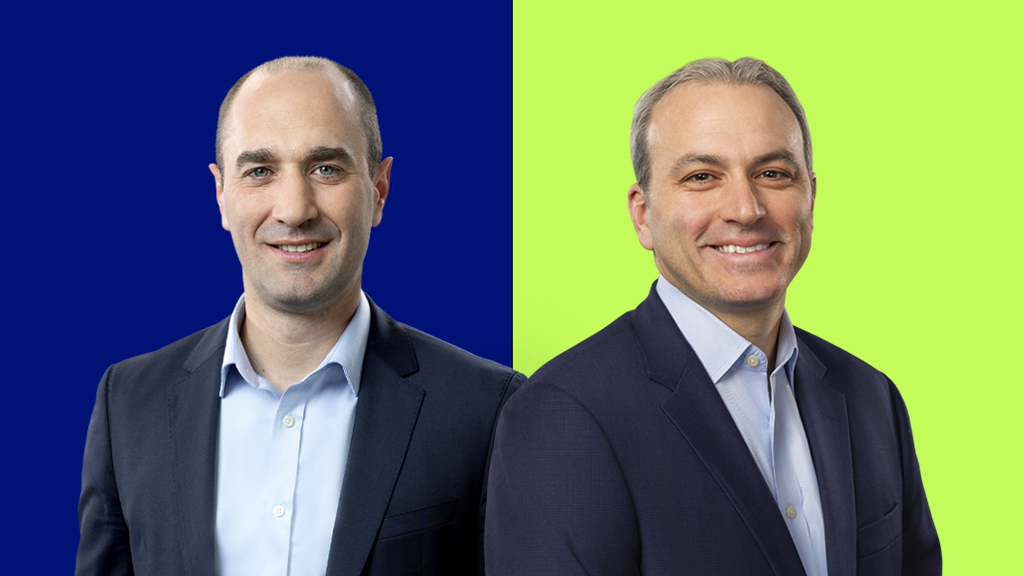
Global equity performance improved in 2025. Brad Rogoff and Emmanuel Cau debate whether international outperformance marks a lasting shift or a cyclical reset.
00:00 Brad
Welcome back to the flip side. Today I'm joined by Ajay Rajadhyaksha, our Chairman of Research, to discuss some pretty remarkable changes in the Fed's process of communicating with financial markets. Ajay, you're probably our most frequent guest here, but it's been a few months since we had you on. So welcome back.
00:17 Ajay
It's great to be back here Brad.
00:19 Brad
Let's talk about Kevin Warsh. He's been the Fed Chair for a few short weeks and he's already just basically ripped apart the playbook. At his first FOMC meeting June he scrapped for guidance, slashed the post meeting statement down to 132 words. Something you and I would have real trouble with and refused to submit his own dot plot projections for future interest rates in the Summary of Economic Projections.
His argument is that forward guidance has turned markets into a mirror. Basically, the Fed watches what markets do. Markets watch what the Fed does and nobody's actually watching the economy. So what do you make of that?
00:57 Ajay
I think the diagnosis is probably very right, Brad. So look he has put his finger on something that a lot of us in markets have felt for years - when every investor on the planet is parsing Jerome Powell adjectives: did he say ‘some further progress’ or ‘modest further progress’ or you know, something along those lines, you have lost the plot. Markets are not pricing risk anymore, they are pricing just Fed speak.
01:26 Brad
I actually thought I was going to be the one here who's defending Warsh, you actually agree?
01:29 Ajay
Well look I agree with the diagnosis. I'm less sure about the prescription because like you said, ripping the bandage off in one go in the middle of an oil shock, with CPI at 4.2%, with the semiconductor complex moving up and down 5% a day, that's bold. I would say that's probably too bold.
01:48 Brad
Well, look, I'm a big believer in staying true to your philosophy, and I think that's certainly holds true especially for a Fed Chair. And the first meeting is exactly the right time to do it. I would think. So if you wait for calm seas I mean, when are you ever really going to do it? Especially in this world. And there's always going to be a reason to delay.
02:06 Ajay
That's fair. But there is a difference between ‘never the right time’ and ‘this is the worst possible time’. Markets right now are already dealing with a hawkish repricing, gold in freefall. Crypto melting down. Worries about fiscal stability across the West. Longer duration. And you're telling me you're going to pick this moment to remove the one thing that anchors expectations. Really?
02:30 Brad
All right. Let me let me push back on why I why I think that. So for guidance it didn't really anchor expectations. What it created was a false sense. I'm not going to say security, I would say certainty, actually. So remember what happened under Powell, the fed guide to ‘transitory’ I'll use my air quotes inflation. Then they had to reverse that pretty darn quickly. They got it for rate cuts. And then they had to walk that back as well.
02:56 Ajay
Sure.
02:56 Brad
So you go back, I mean just it's not just a Powell thing. You go back to Yellen's Fed. They said they would hike four times in 2015. You know that was the so-called dot plot. They hiked once. They said they hiked four times in 2016. They went once. So every time they guided and got it wrong, credibility took a pretty major hit, at least Warsh, he's being honest. We've heard the term data dependency a lot from the Fed, but with all that forward guidance, it kind of felt like a contradiction. Warsh’s Fed – hey, it might actually be data dependent.
03:32 Ajay
Well look that is a good point. And you are right. The Fed's track record on forecasting is and I'm being charitable here. It's mixed this cycle. I still remember when we came out of Covid the Fed expected inflation of around 2% in 2021. We ended up at 4.5% core inflation for that year. And yes, the dot plot has been a terrible predictor of where rates actually end up. So there is an argument that they were giving guidance that was consistently wrong. I suppose that you could say that is worse than no guidance at all.
04:08 Brad
That's exactly what I'm saying. And Warsh, even though he's told us he's going to be a man of few words I actually think made that point beautifully in his press conference, he said financial markets are the most important source of information for central bankers. But when markets are just reflecting what the Fed has told them, my mirror comment before you blinded yourself. So you've turned the most valuable signal in the world into noise.
04:30 Ajay
All right. I'm going to grant you the intellectual elegance of that argument. I do not disagree.
04:35 Brad
Thank you
04:35 Ajay
But let me give you the other side. Markets do need some framework for pricing the future. If the Fed tells you nothing, literally nothing about where rates are heading, what happens to the term premium in bonds?
04:48 Brad
See, I can answer that one – goes up.
04:50 Ajay
It goes up and rate volatility costs more. And that is not free. Higher term premium means higher mortgage rates, higher corporate borrowing costs, wider credit spreads. You are, it seems theoretical Brad, but you are imposing a real cost on the economy in the name of intellectual purity. And I don't know if that is a trade off that Warsh has thought through.
05:10 Brad
I think he has to have thought it through. And I guess what his argument would be is that the cost of the alternative is actually higher. Or honestly, maybe he's just looking at corporate bond spreads like I do every day, which suggests, you know, hey, nothing. Nothing to see here. There at the all time tights really right now. So when you suppress the term premium artificially through forward guidance, you encourage risk taking that wouldn't necessarily happen otherwise. You get investors reaching for yield because they think the fed has their back and you get leverage building up in the system. And we know where that can eventually lead to I think bubbles.
05:48 Ajay
Well look, now you sound like you work for the Bank of International Settlements.
05:54 Brad
So just like the Fed, the BIS doesn't have a perfect track record as you alluded to with your charitable comments before. But it's been right about more things than people give them credit for. And forward guidance was a tool that really came into its own in the financial crisis. When you had a zero lower bound, so rates couldn't go any lower. The Fed used language to provide additional stimulus. That makes a ton of sense to me, right? You know, they could say, hey, rates will stay low for an extended period. That was 2009, though, and it made sense also in 2020 when we had Covid and we had once again, an extraordinary period. But we're not at the zero lower bound anymore. Rates are at, you know, 3.5%. And there are plenty of other crisis tools that we've stopped using. So why are we using this one in a non-crisis environment?
06:45 Ajay
I would push back some on the framing. Forward guidance wasn't just a crisis tool I would argue it was the endpoint of a 30 year march to transparency because people forget how opaque the Fed used to be. Before 94, the fed did not even announce its rate decisions. Banks would figure out what had happened by watching the money market. You would see the Fed funds rate move in the open markets and deduce that the Fed had acted. There was no statement, no press conference, nothing.
07:12 Brad
But would that really work in this era? So that's the Greenspan era, right? I'll tell you other things we didn't have in 1994. We didn't have X or Truth Social.
07:20 Ajay
That is true too and you're right, Greenspan made the first public rate announcement in Feb 94, and it was considered revolutionary at the time. Then came 99, where the Fed starts issuing statements after every meeting. Then comes Bernanke and press conferences in 2011, the Dot plot in 2012, the formal 2% inflation target. The thing is Brad, each step was deliberate, and the intellectual case in each case was the same. Transparency makes policy more effective. If markets can anticipate your move, the actual decision doesn't cause disruption, and communication itself becomes a policy tool.
07:57 Brad
I think everyone who's listening to us, just listened to what you said probably thinks, wow, each one of those steps, it seems really reasonable, but I would say they seem reasonable in isolation. The cumulative effect, though, was to create exactly the dependency that Warsh is now trying to break. It's like each step towards hand-holding made sense on its own. But 30 years later, you've got a market that can't cross the street without the Fed walking it to the curb.
08:23 Ajay
Maybe. But my point is that Warsh is not just ending a crisis or experiment, he's reversing three decades of institutional evolution and evolution that had a coherent rationale behind it. I think that's a bigger deal than people are giving it credit for.
08:40 Brad
Or it could be a correction. I mean, pendulums do swing. So the Fed went from total opacity, as you talked about, to total transparency. I think you could argue they overshot. I am not suggesting no press release on the decision or no statement at all. Warsh is just swinging it back and maybe it'll go too far. Maybe not far enough, but but the direction I think he's moving is correct.
09:04 Ajay
My only issue is – my question is whether you can unwind 30 years of learned behaviour in markets and inside the Fed itself, without breaking something in the process.
09:15 Brad
Well, let's look at the evidence for the last few weeks. I mean, didn't Warsh just do that. What happened? Markets for a day or two, they wobbled, you know, moved a bit. But last I checked, the equity markets still have pretty healthy this year. And we had a modest repricing in bonds. And life went on.
09:32 Ajay
Well look it's been 3 to 4 weeks, Brad, that's not a stress test. I would wait until the next genuinely ambiguous data point payrolls that could justify either a hike or a cut. See what happens when the market has no guidance to lean on. That, I think, is when you will see a lot more volatility.
09:50 Brad
You probably see more volatility and maybe that volatility is actually healthy. Maybe we spent the last ,I don't know since the crisis, so talking about going on 18 years now trying to eliminate volatility from markets completely. And all we've really done is move it from the surface and actually stick it into the foundation. So small frequent moves, I think you could argue are better than the kind of violent repricing you get when forward guidance has to be completely abandoned because, you know, in reality of the situation didn't cooperate with it.
10:19 Ajay
All right. I am going to give you that one, because the taper tantrum in 2013 is a perfect example of what you are talking about. The Fed guided markets priced it in. And then when Bernanke even hinted at a change, the entire bond complex blew up. And yes, you're right. That instance forward guidance arguably helped create the fragility that it was supposed to prevent.
10:41 Brad
Right? And Warsh, essentially, his argument is saying, let's have a bit more volatility today and then we don't hopefully get the catastrophic volatility when the guidance inevitably breaks down.
10:51 Ajay
All right. I'm not pushing back too hard. But there's something that worries me here that's less about theory and more about practice. Warsh has stopped giving all guidance. But have the other 17 FOMC members? Because last time I checked, there are still a bunch of regional Fed presidents giving speeches every week, doing media interviews, publishing their own forecasts. If the Chair goes quiet but everyone else keeps talking, you haven't eliminated forward guidance. You've just made it noisier, less coordinated.
11:21 Brad
All right. So that's actually an interesting wrinkle. And I'm actually going to take the other side of it. But there's positives and negatives to this stuff. So Fortune for example, ran a piece arguing that Warsh dropping his dot might actually empower the other FOMC members. So instead of everyone clustering around the Chair’s view, you get genuine dispersion of opinion. The market has to do its own work to figure out where the consensus really is. But I actually think that could be healthier.
11:47 Ajay
In theory, yes, but in practice, it also means every speech by every regional Fed president becomes a potential market moving event. You've gone, Brad, from one person guiding the market to 17 people confusing it.
12:04 Brad
Or we could go glass half full and say 17 people informing it.
12:08 Ajay
Well, glass half full, says you and me, the Research analysts who can take long term views and don't have to play around it every day.
12:14 Brad
I don't know, but if I'm a trader, wouldn't I rather have some, you know, some volatility in the short term and not the big, huge volatility event that might work for them too. But but let me try another angle here. One thing I find compelling about Warsh’s approach is what he said about the Dot plot that for him personally, it's just not helpful in the conduct of policy. It's a pretty remarkable admission. The Chair of the Federal Reserve is saying that the centerpiece of Fed communication for the last decade doesn't even help him do his job.
12:46 Ajay
It absolutely is remarkable. And you know the surprising part? He might be right, because the dot plot has become a crutch for the Fed and for markets. The Fed feels obligated to produce it. Markets feel obligated to trade it, and it is wrong more often than it is right. So look, there is a genuine case for scrapping it entirely.
13:05 Brad
It sounds like we have full agreement on a point here.
13:06 Ajay
Well, well, the dot plot does depend on the Fed's economic forecasts being realised. So when they are wrong, as they often are, the dot plot is wrong. Look, we agree the dot plot is broken. I think we disagree on whether the answer is to fix it or burn it.
13:24 Brad
I can tell you what Warsh thinks. His answer is clearly the burn it camp. And in that case, you wouldn't have to worry about the Chair not giving a dot plot and the other members putting theirs out there.
13:33 Ajay
I hear you, I would just be more comfortable with that approach if he told us what replaces it. You cannot remove a communication tool and then just leave a vacuum. Markets abhor a vacuum. I would say even more than nature does.
13:48 Brad
Well, maybe the replacement, it's simpler actually, than we're thinking here. It's just the data that replaces it. The Fed reacts to data, markets react to data. Fed also reacts to markets, right. And so the intermediary gets removed and the signal gets cleaner. It's kind of what I started with in the beginning. Data dependency.
14:10 Ajay
Again that sounds elegant. And I notice you're doing a fair bit of that in this conversation.
14:16 Brad
Do enough podcats you better start sounding elegant.
14:18 Ajay
That's that's true. But here's where Warsh lost me. And look, I think it is an important distinction. There's a difference between dropping forward guidance and refusing to articulate your reaction function at all. Forward guidance says here's what we will do next. A reaction function says, here's how we think. And those are very different things. You can scrap the first without scrapping the second.
14:41 Brad
Yeah. And Warsh wants to scrap both here.
14:43 Ajay
He does. He’d definitely scrap both. At his first press conference as Chair he was asked directly how do you inflation versus growth. What would make you hike? What would make you cut? And he basically refused to answer. He even called his own response a very unsatisfactory answer. Look, those are his words, not mine.
15:01 Brad
At least you feel like you're getting honesty with him though.
15:03 Ajay
Yeah, you are. But that's not the type of honesty that helps you price a two year bond. Markets don't need to know the destination, they just need some sense of the map. If you don't tell me what you will do, and you don't tell me what you think, how you think, well, what are you actually communicating?
15:20 Brad
But isn't that the logical extension of his argument? The moment you say if inflation is above X, we'll do Y markets front run it and you're right back to the same hall of mirrors. The reaction function becomes forward guidance by another name.
15:35 Ajay
Look that's a clever argument. But it is also a recipe for complete opacity. At some point you're not a central banker, you're just an enigma.
15:44 Brad
Okay. A bit of an enigma, fair. But he did mention five task forces, and hopefully that'll provide a little bit more clarity. But but I take your point. There's a spectrum between spoon feeding the market and going completely dark. Maybe he's overcorrected a bit. But here's the thing analysts are already calling this a learning by doing exercise. Give him a few meetings, markets will figure out the reaction function from the decisions themselves - revealed preference, not stated preference.
16:14 Ajay
Well, learning by doing is essentially a polite way of saying trial and error. And in the meantime, every data print becomes a guessing game.
16:25 Brad
Or an opportunity. I guess I'm really the glass half full guy today. If you're a good analyst, right, you know, you think about it. We get paid to do research for a living. Aren't we lucky? But we should be celebrating our intellectual freedom right now. You can watch the decisions, read the minutes, and piece together the framework from what they actually do rather than what they say. I mean, it's harder work, but I think it's better work, more fun work too.
16:49 Ajay
Well, maybe, but but it also means, Brad, that the first time Warsh surprises the market with a move nobody saw coming and believe you mean that will happen. The repricing won't be gentle. Without even a reaction function to anchor expectations you could get a flash crash, a taper tantrum, whatever you want to call it. The shock absorbers have been removed.
17:12 Brad
Well, or you could say the shock absorbers were too good. And now we'll find out if the car can actually handle the road for a bit. And no one said he has to stay quiet in times of turmoil, actually.
17:24 Ajay
Well, I admire your optimism. Here's where I come down. I do think Warsh has correctly identified a real problem. Forward guidance has gone from a useful crisis tool to an addiction that distorts both markets and policy. Yes, but execution risk is high. Doing this in the middle of one of the most complicated macro environments in years - oil shocks inflation, persistence, geopolitical uncertainty. That's a high wire act. If it works, it looks like a visionary. If it doesn't and we get a market accident, he will be the chair who removed the guardrails right before the crash.
18:01 Brad
What I'd say is the guardrails probably just an illusion anyways. I mean, forward guidance you alluded to this earlier didn't prevent the taper tantrum. It didn't prevent the missed call on inflation, didn't prevent the Silicon Valley Bank related crisis. I mean, the guardrails, they were painted on the road, they looked real, but they weren't actually stopping anyone from going off the edge. And as we've said, at least Warsh, he's being honest. So let me say this as a bit of an end point here. I think this is one of those rare policy debates where both sides might have a point. The status quo is broken, but the transition, it's risky. And whether Warsh ends up being remembered as a Chair who liberated the Fed from its own echo chamber, or the one who flew blind into the storm, that depends entirely on what happens next.
18:51 Ajay
And we will be watching.
18:52 Brad
We certainly will. And so will all of our listeners, I'm sure. Clients who want to read more about our views on new Fed communication policy should also listen to our Macro Cast US in Focus: Warshspeak from June 22nd. Available on Barclays Live. And if you enjoyed today's episode, hit subscribe. See you next time on the Flip Side.
About the experts

Brad Rogoff
Global Head of Research

Ajay Rajadhyaksha
Global Chairman of Research
* We acknowledge and agree for Barclays to collect, use and otherwise process our/the Relevant Individual's Information in accordance with the Notice, other effective privacy terms and information processing terms agreed by ourselves/the Relevant Individual with Barclays, for the purposes set out therein, respectively.
* We acknowledge and agree that Barclays may disclose to any third party described in the Notice as a potential recipient of data outside mainland China our.the Relevant Individual's Information in accordance with the Notice, other effective privacy terms and personal information processing terms agreed by ourselves/the Relevant Individual with Barclays, and for the purposes set out therein, respectively.
I consent to my email address being used by Barclays to provide me with personalized advertisements on third-party websites and social media platforms, as described in our Privacy Notice.
An email was sent to you at the address provided. Complete your subscription by clicking the link provided to verify your email address.
Sorry there was a problem. Unfortunately your subscription to our newsletter has encountered an error.
In addition to the cookies we use on our website, we also use cookies and similar technologies in some emails and push notifications. These help us to understand whether you have opened the email and how you have interacted with it. If you have enabled images, cookies may be set on your computer or mobile device. Cookies will also be set if you click on any link within the email.
In addition to the cookies we use on our website, we also use cookies and similar technologies in some emails and push notifications. These help us to understand whether you have opened the email and how you have interacted with it. If you have enabled images, cookies may be set on your computer or mobile device. Cookies will also be set if you click on any link within the email.
In addition to the cookies we use on our website, we also use cookies and similar technologies in some emails and push notifications. These help us to understand whether you have opened the email and how you have interacted with it. If you have enabled images, cookies may be set on your computer or mobile device. Cookies will also be set if you click on any link within the email.
Please review and manage your email cookie settings below. For more information, please read our Cookie Policy. Please select 'Save and Subscribe' below to remember your email cookie preferences and subscribe to the newsletter.